
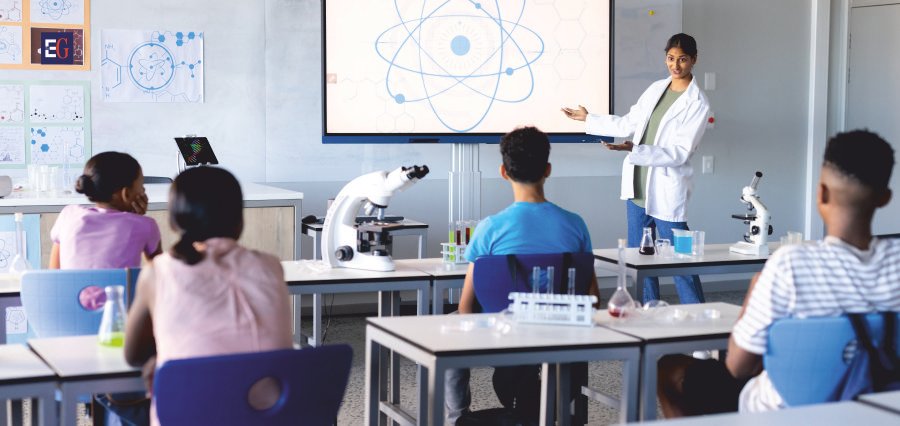
Education is changing as students gain access to more information, digital tools, and interactive learning experiences. Traditional lectures still have value, but modern classrooms increasingly require approaches that encourage participation, creativity, critical thinking, and practical application. Innovative Teaching Methods help educators move beyond one-way instruction and create learning environments where students actively participate in their education.
From project-based learning and flipped classrooms to gamification, collaborative learning, personalized instruction, and technology-enabled education, these approaches can make lessons more engaging and relevant. The most effective methods do not simply introduce technology; they connect teaching strategies with students’ learning needs and real-world challenges.
What Are Innovative Teaching Methods?
Innovative Teaching Methods are modern instructional approaches that make learning more interactive, practical, personalized, and student-centered. Instead of relying mainly on lectures and memorization, these methods encourage students to explore concepts, solve problems, collaborate with others, use technology, and apply knowledge in meaningful situations.
Common characteristics include:
- Active student participation
- Experiential and project-based learning
- Personalized learning experiences
- Collaborative classroom activities
- Digital and multimedia resources
- Real-world problem solving
- Continuous assessment and feedback
- Development of critical thinking and creativity
The objective is not to replace teachers with technology. It is to give educators better ways to connect with students and support different learning styles.
Why Are Modern Teaching Strategies Important?
Students today learn in an environment shaped by digital communication, multimedia content, online resources, and rapid technological change. Schools and universities therefore need teaching approaches that prepare learners for situations beyond examinations.
Modern teaching strategies can help students:
- Understand concepts through practical experiences
- Develop communication and teamwork skills
- Improve problem-solving abilities
- Become more confident learners
- Connect classroom knowledge with real-world situations
- Take greater responsibility for their education
- Develop creativity and independent thinking
For educators, these approaches can also provide more opportunities to understand how students learn and where they need additional support.
1. Project-Based Learning
Project-based learning allows students to investigate a question, challenge, or problem over a period of time. Instead of simply studying information, learners use their knowledge to create something or develop a practical solution.
For example, students studying environmental science might design a waste-management plan for their school. Business students could develop a marketing strategy for a fictional company.
This approach combines research, collaboration, presentation skills, critical thinking, and practical application.
Key benefits
- Encourages independent learning
- Builds teamwork skills
- Connects theory with practice
- Improves research abilities
- Supports creativity and problem solving
2. Flipped Classroom Learning
The flipped classroom changes when and where students receive instructional content. Learners may watch lectures, read learning materials, or review educational videos before class. Classroom time can then focus on discussions, exercises, experiments, and problem-solving activities.
This model gives teachers more time to interact directly with students. Instead of spending most of the lesson explaining basic concepts, educators can focus on areas where students need additional guidance.
Flipped learning can work particularly well when digital learning resources are combined with meaningful classroom activities.
3. Gamification in Education
Gamification introduces game-like elements into learning. Points, challenges, badges, levels, quizzes, rewards, and progress tracking can make certain learning activities more engaging.
The aim is not to turn every lesson into a game-based activity.. Instead, educators can use selected gaming principles to encourage participation and provide students with clear progress indicators.
For example, a language class could use levels and challenges to encourage students to learn new vocabulary. A mathematics teacher might introduce problem-solving competitions that allow learners to earn points for completing increasingly difficult tasks.
When carefully designed, gamified learning can support motivation while maintaining educational objectives.
4. Collaborative Learning
Collaborative learning encourages students to work together rather than completing every activity individually. Small-group discussions, peer teaching, team projects, debates, and problem-solving exercises can create more active classrooms.
Students often gain a deeper understanding of a subject when they explain concepts to their classmates. Collaboration also develops skills that are important beyond school, including communication, negotiation, leadership, and conflict resolution.
Teachers can make group work more effective by assigning clear responsibilities and evaluating both individual contributions and team outcomes.
5. Personalized Learning
Every student has different strengths, interests, learning speeds, and areas that require improvement. Personalized learning attempts to adapt instruction to these differences.
Educators can use assessments, learning platforms, student feedback, and classroom observations to identify individual needs. Lessons can then include different resources, activities, or levels of difficulty.
Personalized instruction can be particularly valuable in classrooms where students have significantly different levels of prior knowledge.
6. Experiential Learning
Experiential learning focuses on learning through direct experience. Students may conduct experiments, participate in field activities, complete simulations, visit organizations, or work on practical assignments.
This method helps learners understand how theoretical concepts operate in real situations.
For example, students studying entrepreneurship could develop a basic business concept, conduct market research, calculate costs, and present their proposal. Such activities make abstract business concepts easier to understand.
7. Technology-Enhanced Learning
Technology gives teachers and students access to a wider range of learning resources. Interactive whiteboards, learning management systems, educational applications, virtual laboratories, digital simulations, online libraries, and multimedia presentations can support different forms of instruction.
However, technology should solve a learning problem rather than become the objective itself.
A digital tool is useful when it helps students understand a difficult concept, practice a skill, collaborate more effectively, or receive timely feedback.
8. Inquiry-Based Learning
Inquiry-based learning encourages students to ask questions, investigate evidence, and develop their own conclusions. Instead of immediately providing every answer, teachers create opportunities for learners to explore a subject.
A science teacher, for example, might present an observation and ask students to develop hypotheses before conducting an experiment.
This approach supports curiosity and encourages students to become active participants in the learning process.
9. Design Thinking for Students
Design thinking introduces students to a structured approach to solving problems. It commonly involves understanding users, defining a problem, generating ideas, creating prototypes, and testing possible solutions.
Students can use this method across subjects.
A classroom project might ask learners to identify a problem faced by students at their school and develop a practical solution. They could interview classmates, brainstorm ideas, create a prototype, and collect feedback.
This approach develops creativity while teaching students that effective solutions often require testing and improvement.
10. Microlearning and Bite-Sized Lessons
Microlearning breaks complex subjects into smaller learning units. Instead of presenting a large amount of information at once, teachers can organize content into short lessons, activities, quizzes, or videos.
This approach can help students focus on one concept at a time. It can also make revision easier because learners can return to specific topics without reviewing an entire lesson.
Microlearning works particularly well for vocabulary, formulas, definitions, software skills, and other subjects that can be divided into smaller concepts.
How Can Teachers Choose the Right Method?
There is no single teaching strategy that works for every classroom. Educators should consider the subject, student age, learning objectives, available resources, class size, and individual learning needs.
A simple selection process can include:
- Define the learning objective. Identify what students should understand or accomplish.
- Understand the learners. Consider their existing knowledge, interests, and challenges.
- Choose the appropriate activity. Select a method that supports the objective rather than using a trend simply because it is popular.
- Provide clear instructions. Students should understand what they need to do and why.
- Monitor progress. Observe participation and identify where learners need support.
- Assess outcomes. Measure whether the teaching method helped students achieve the intended learning goal.
- Improve the approach. Use feedback to adjust future lessons.
The Role of Teachers in Modern Classrooms
Technology and new classroom strategies do not reduce the importance of teachers. Instead, they can change the teacher’s role from primarily delivering information to guiding, mentoring, facilitating, and assessing learning.
Teachers remain responsible for creating meaningful learning experiences, encouraging participation, addressing misconceptions, and providing human support.
Strong educators also know when not to use a particular method. A traditional explanation may be more effective for introducing a difficult concept, while a project or group activity may work better when students need to apply that knowledge.
The most successful classrooms often combine several teaching approaches rather than relying on one technique.
Challenges of Implementing Innovative Teaching Methods
Although Innovative Teaching Methods can improve engagement, implementation may present challenges.
Schools may face limitations such as:
- Insufficient digital infrastructure
- Limited teacher training
- Large classroom sizes
- Restricted budgets
- Unequal student access to technology
- Curriculum and assessment constraints
- Resistance to changing established teaching practices
These challenges do not mean that modern teaching strategies cannot succeed. Schools can begin with small changes, such as introducing collaborative activities, classroom discussions, project assignments, peer learning, or short digital resources.
Professional development is also important. Teachers need practical training that shows how a method can be used effectively rather than simply introducing them to new educational terminology.
Measuring the Impact of New Teaching Approaches
The success of Innovative Teaching Methods should be measured through learning outcomes rather than classroom excitement alone.
Educators can examine:
| Measurement Area | What Teachers Can Evaluate |
| Engagement | Participation, attendance, and classroom interaction |
| Understanding | Assessment results and concept mastery |
| Critical Thinking | Quality of reasoning and problem solving |
| Collaboration | Teamwork and communication |
| Creativity | Originality and quality of student work |
| Independence | Ability to complete tasks without constant guidance |
| Retention | Ability to apply knowledge over time |
Student feedback can also help educators understand which activities supported learning and which areas require improvement.
What Is the Future of Teaching?
The future of education will likely involve a combination of classroom instruction, digital resources, personalized learning, collaborative activities, and practical experiences. Artificial intelligence, virtual learning environments, interactive simulations, and data-driven assessment may expand the tools available to educators, but effective teaching will continue to depend on strong pedagogy.
Schools should focus on building learning environments where technology supports human connection rather than replacing it. Teachers will remain central to motivating students, understanding their needs, developing confidence, and helping them apply knowledge.
Conclusion
Innovative Teaching Methods can help education move from passive information delivery toward active, practical, and student-centered learning. Project-based learning, flipped classrooms, gamification, collaborative learning, personalized instruction, experiential education, inquiry-based learning, and technology-enhanced teaching each offer different ways to improve classroom experiences.
The strongest approach is not to follow every new educational trend. Instead, educators should select methods that match their learning objectives and students’ needs. When thoughtfully implemented, modern teaching strategies can make classrooms more engaging while developing the creativity, communication, critical thinking, collaboration, and problem-solving skills students need for the future.
Ultimately, effective education is not defined by how much technology a classroom uses. It is defined by how successfully students understand, apply, question, and build upon what they learn.