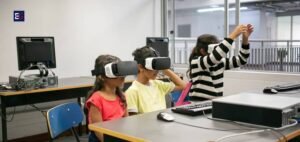

Education has always been the foundation of progress, however, the methods of learning today are almost unrecognizable even compared to ten years ago. The concept of a classroom is no longer confined to four walls, blackboards, and textbooks. Due to fast technological development and changes in learner’s expectations, the education sector has to innovate not only as a trend but also like a necessity. It has been changing the ways of teaching, student engagement, and the overall learning experience in a more inclusive, flexible, and future, ready manner.
The Changing Meaning of Innovation in EducationInnovation in education is frequently confused with the mere integration of technology in classrooms. Although digital tools are essential, the real innovation is much more profound. It includes totally changing the way knowledge is delivered, the way students engage with ideas, and the way educators assess success.
Nowadays, learners are inquisitive, flexible, and have access to a huge amount of information. In order to satisfy these demands, education systems must transition from a focus on memorization to emphasising critical thinking, creativity, and problem, solving.
This change can be seen in the pedagogical approaches that foster open discussion, collaboration, and the practical application of knowledge. Learning through projects, learning by experience, and learning in interdisciplinary ways are becoming more popular because they align the theoretical with the practical. Hence, innovation in education is about designing learning experiences that equip students for the challenges of the world beyond school and not just for the exams.
Technology as a major factor behind educational innovationOne of the most potent forces pushing for educational innovation is technology. The traditional way of teaching and learning is changed enormously by digital classrooms, online learning platforms, and AI, powered tools.
Students can now control their own learning pace, repetitively study difficult topics, and even go further in the subjects they are interested in. Teachers, moreover, have a chance to tailor their instruction, see students’ developments at a glance, and concentrate more on guiding students than on lecturing.
Nonetheless, it should be noted that technology is not replacing teachers, but rather giving them more power. A smart classroom, a virtual lab, and interactive content are just a few of the things that make learning fun and more real. Innovation in education ensures that technology is used thoughtfully, enhancing human connection rather than reducing it. If digital devices are utilized in good time, they will be able to solve open problems in education, for instance, by providing students living in remote areas or those from deprived neighborhoods with equal opportunities and easy access to education.
Student, Centric Learning and Innovation in Education
The core of innovation in education is the transition of learning from teacher, centric to student, centric. Many traditional systems had a uniform treatment towards students without considering their different learning styles or interests. New educational innovation understands that every learner has a different way of learning. Some learners like to see examples; others remember better when they do or discuss. A personalized learning model solves the issue of individual differences by providing the learner with content and speed that fit their own needs.
Not only does this method result in higher academic achievements but also it gives students more confidence and increases their interest. If students are recognized and their feelings acknowledged, they will be willing to commit more of their energy and time to education. Innovation in education also stresses pupils’ mastery of emotional intelligence, as well as good communication and collaboration skills that together help students to become well, rounded. Education nowadays is not only about students acquiring knowledge, but also about students developing thinking, adaptability and growth skills.
Role of Teachers in Driving Innovation in EducationTeachers are still the mainstay of any educational system, and education innovation really takes off when educators are both empowered and supported. Contemporary teaching is a continuous learning process that requires teachers be versatile, adaptable, and receptive to new things. Through professional development initiatives, digital training, and teacher communities, educators can be both informed and motivated.
Innovative teachers practice different teaching methods, use stories for illustration, promote questioning, and offer emotional security for learners to bring out their ideas. They become facilitators instead of the top authority figure; students will then discover that knowledge is something they create rather than receive. Giving teachers the liberty to experiment, make mistakes, pick up from them, and grow together with students is when education innovation becomes vibrant.
The Future of Innovation in EducationInnovation in education, however, is always the fair weather friend of a changing world. In the light of societal and economic changes, it will continue to morph and adapt. Competencies such as critical thinking, the ability to change and being open to learning are supposed to outweigh content knowledge. Educational institutions are the ones responsible for readiness in facing the not, yet, existing jobs. In such a scenario, the education system should be one that values flexibility, interdisciplinary learning, and ethics and morals.
Tomorrow’s classroom might effortlessly combine both physical and digital environments, thus, the students will have exposure to the whole world and opportunities for working together. Nevertheless, the main reason for introducing innovations in education will always be to instill curiosity in students
Basically, innovation in education is not switching everything radically overnight. It is more about a thoughtful evolution, a learner, centered approach, and creating systems that foster growth. Education, as the world changes, is the first to follow this lead and make learning remain relevant, inclusive and profoundly human.